

Именно зимой нужно побывать на Неве у ледокола «Красин».
Гениальная экспозиция, если говорить как о выставке.
Одно из мест, пробуждающих сильнейшие патриотические чувства без оглядки на обычную нашу, куцую и потрёпанную боязнь высоких слов.
Именно зимой нужно побывать на Неве у ледокола «Красин».
Гениальная экспозиция, если говорить как о выставке.
Одно из мест, пробуждающих сильнейшие патриотические чувства без оглядки на обычную нашу, куцую и потрёпанную боязнь высоких слов.
И, как всегда, слишком высокий столик… Повседневные тренировки в неприспособленном месте. Результат здесь 691 зн/мин, личный рекорд в Соточке 875, средняя скорость 650—660.
Как и любое видео, в котором заснят процесс скоропечати, данный ролик можно использовать как обучающий: замедлить скорость воспроизведения и наблюдать за движениями. А ещё лучше будет, если смогу (если научусь) сделать из него ролик, специально показывающий движения в темпе замедленной съёмки.
А пока это просто «сырое» видео из серии роликов, затребованных от меня для профайла на ТВ шоу «Удивительные люди 3-й сезон». Я не имею возможности организовать съёмку разгона на личные рекорды или, тем более, съёмку полноценного обучающего видео. Начисто не понимала, зачем, собственно, требуют, чтобы материалы для профайла на шоу предоставила я сама. Потом телевизионщики сняли что-то своими профессиональными силами и оборудованием, снятый материал устроил их, и слава судьбе. 🙂
Съёмка 26.06.2018 в Москве, Чертаново. Снимала подруга, которая в тот день впервые в жизни пользовалась режимом видео на смартфоне. Разрешение в исходнике 1080, частота кадров 29, при обработке сделалась 25.
Обработала (удалила «мусор») — осваиваю AIE (Adobe Illustrator Elements 12).
…Путешествие длиною в жизнь. 🙂
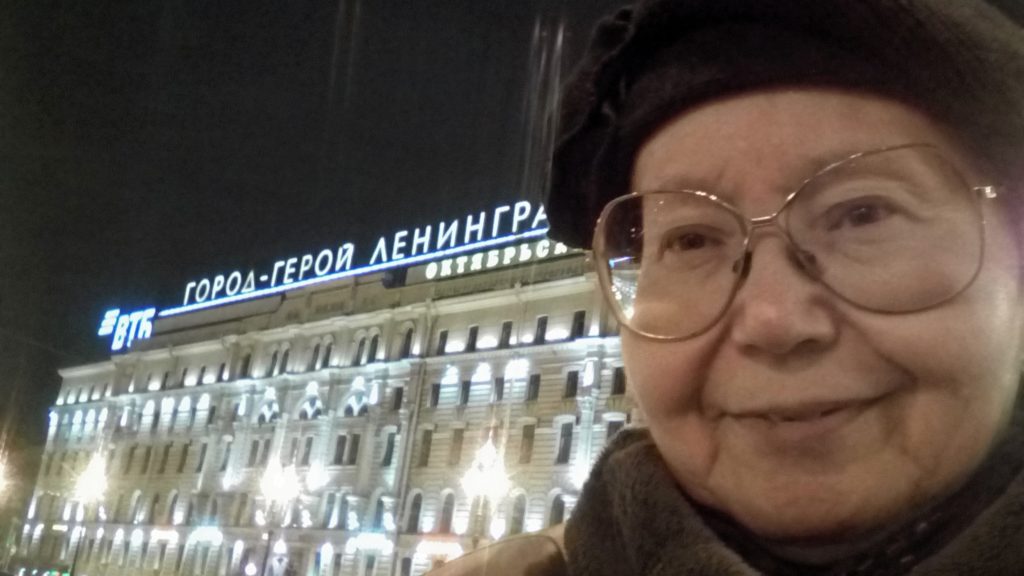
Снег и лёд ещё притворялись снегом и льдом, а небо смотрело выше и их строптивость прощало. 🙂
#Санкт-Петербург, #Фонтанка, #лёд, #снег, #скоровесна, #конецзимы, #АничковМост, #МузейФаберже

_190118, Мск
Диалог на лестнице подземного перехода
Я (чувствуя, что у меня опять пытаются взять и поднести мою сумку-тележку):
— Не надо, я на неё опираюсь, это тросточка, спасибо большое!
— Я помочь вам хочу.
— Нет-нет, спасибо, мне с ней удобно, я опираюсь на неё…
— (Решительно вырывая тележку из моих рук) Я помогу!
— Да я ОПИРАЮСЬ!!!
— Да я не ОТБИРАЮ, что вы?!! я помочь!
И вот так на почти каждой лестнице. А то и молча сзади выхватывают тележку и, довольные, топают с ней вверх. Не замечая, что «одуванчик» за ними и не поспевает, и вообще едва удержал равновесие под их атакой.
Спасибо, конечно, всем за благие намерения. Но — почему вот у приезжих из Азии всегда хватает времени и какого-то адекватного наполнения в голове, чтобы начать не с действия, а с вопроса: «Позвольте Вам помочь?» И только убедившись в согласии, они берутся за твою тележку. В ответ на моё «Спасибо, не надо» никто из них никогда не вырывал тележку силой. Молчком сзади они тоже не подсекают. Да ещё восточная учтивость речи, вишенка на торте… А наши-то почему такие медвежливые?.. Хорошо ещё, не все, но некоторые. :rofl:
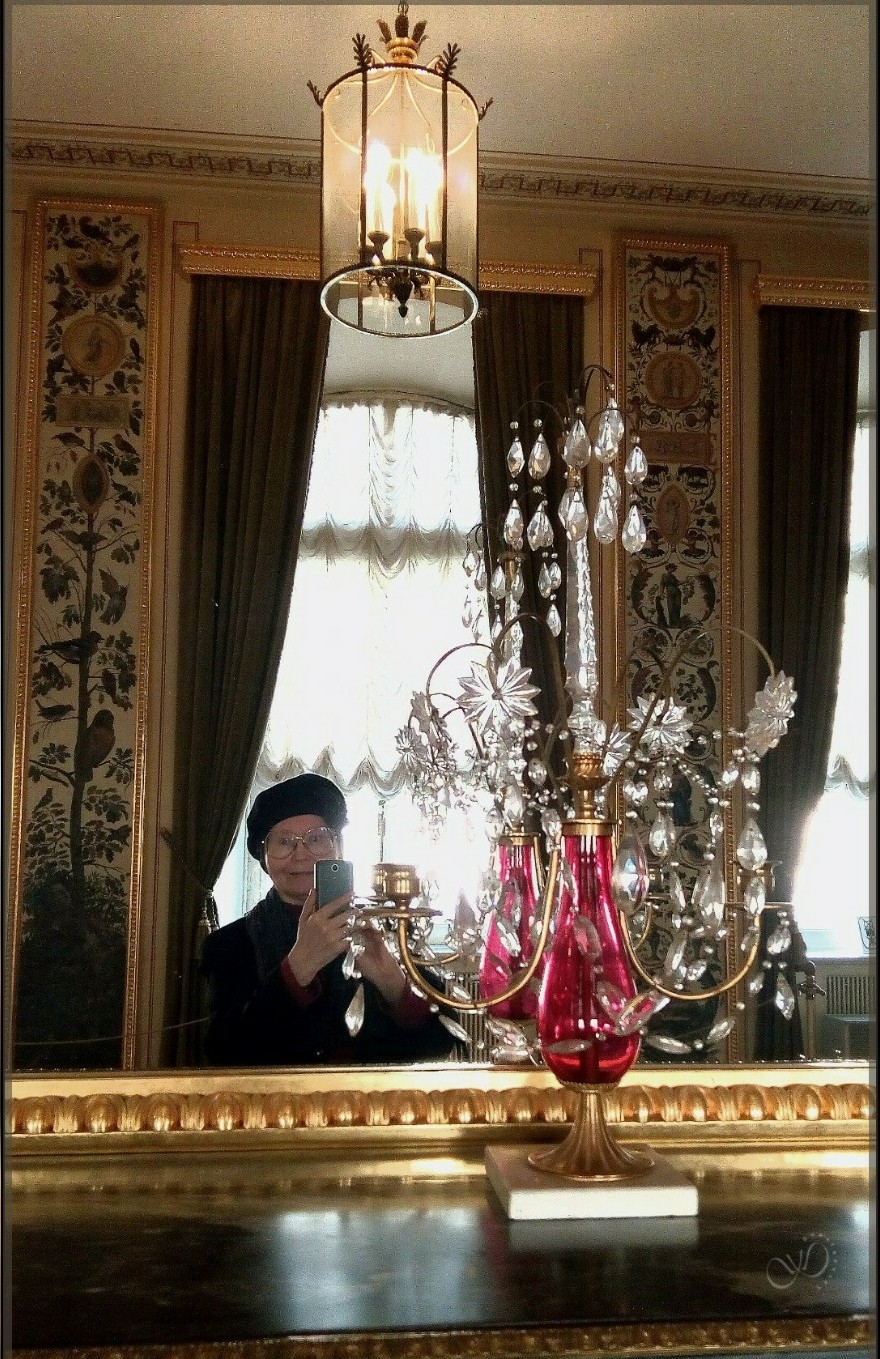
Красивые предметы, кажется, вечно молоды.
Вот эта драгоценная жирандоль из Строгановского дворца в Санкт-Петербурге пережила трудную разлуку со своей «родной сестрой». Одну из них дерзко украли прямо из дворца, и она исчезла из поля зрения музейных работников на много лет. А потом произошло чудо, такое желанное в мире пропавших экспонатов: украденная жирандоль «всплыла», и музею удалось её выкупить!..
Может, деньги поступили не из бюджета, ведь очень сложно изыскать бюджетные средства для внезапной и дорогой покупки. — Спонсоры? Например, та баронесса, живущая во Франции, последний потомок рода Строгановых? Дворец реконструировался, насколько знаю из фильма, на добытые ею средства. Не знаю, но просто приятно думать, что и здесь мог кто-то прийти на помощь. А каково было музею выкупать свою кровную вещь!.. Но пришлось пойти на всё возможное и невозможное.
И вот несколько лет назад пропавшая жирандоль вернулась в свой настоящий дом!.. Теперь они с «сестрой» снова в одном зале, по обе стороны дверного проёма, отражаясь каждая в своём зеркале. Ослепительно прекрасны и нарядны, как будто не было ни лет, ни расставания.
Когда бываю здесь, обязательно фотографируюсь с нею, в залог будущих своих возвращений…
#путешествия, #Санкт-Петербург, #Строгановский дворец, #Строгановы, #жирандоль, #канделябр, #Русский музей, #приключения
Что-что нужно сделать с защитным слоем?!..

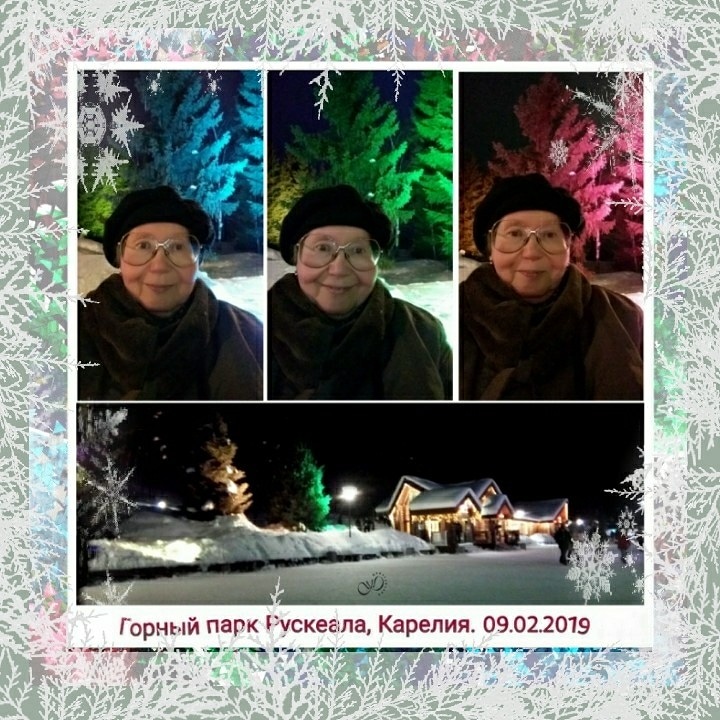
Декоративная подсветка в горном парке Рускеала работает только зимой. — Что ж, пришлось ехать зимой. 🙂
#путешествия #Карелия #Рускеала #иллюминация

08 February 2019
Google’s new Live Transcribe app may actually be the real-time speech-to-text transcription technology I’ve been waiting for. And if seeing is believing, Google’s launch video may convince you that truly reliable real-time transcription for everyday use is finally here.
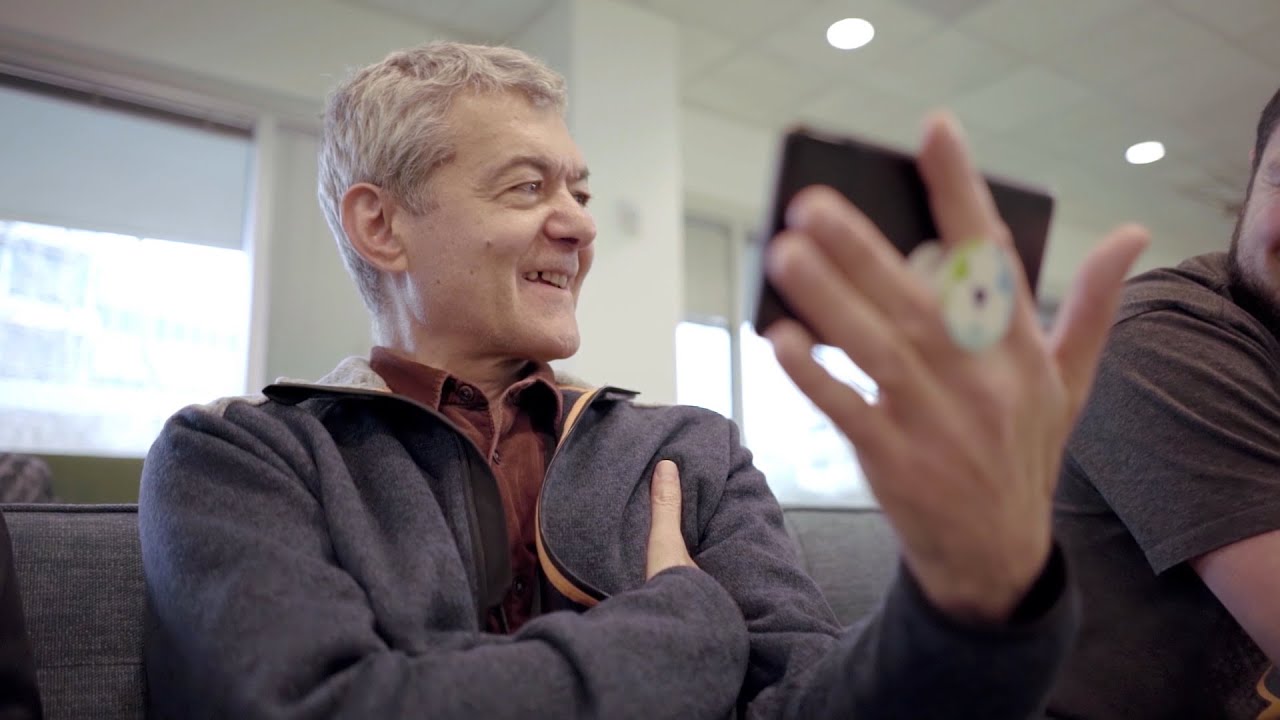
Watch Dimitri Kanevsky, a deaf Google research scientist, use the Android app to order tea at Starbucks and chat with a colleague about a weekend chili party.
And watch Dr. Mohammed Obiedat, a deaf professor at Gallaudet University, play a board game with his kids, chat with them about their schoolwork, and actively participate in a parent-teacher conference.
I loved the scene where Kanevsky orders at Starbucks. For years before I got my cochlear implants, I never ordered anything more than a tall coffee. Otherwise I risked having to engage in an impossible «excuse me?….what?….say it again, please» conversation with the barista.
And even the simple coffee order was a challenge before I realized they asked the same questions every time: «Ooo-fuh-eem?» was «Room for cream?,» «Eh-eh-eh eth?» was «Anything else?,» and «Oo-oo ah-a ee-eek?» was «Do you want a receipt?»
But when Kanevsky orders his tea, the barista’s questions pop up on his smartphone screen as soon as she asks them. And he’s ready with immediate answers. He’s having a real conversation!
Kanevsky has worked on speech recognition and communications technology for 30 years. Deaf since early childhood, he had been disappointed by speech-to-text solutions that always seemed inadequate in spite of promising advances in digital transcription technologies. So he teamed up with Google engineer Chet Gnegy to develop the Live Transcribe app.
They also collaborated with Dr. Obiedat and others at Gallaudet University to better understand what features in the app would be most useful to people with hearing loss.
Until now, truly effective real-time speech-to-text translation for everyday use has seemed just around the corner, but not yet here.
Sure, there’s been a flood of speech recognition technologies («Hey Siri») and other applications such as fast translation of voice mail to text messages. And real-time captioning of phone conversations has been an invaluable service for people with hearing loss (although live operators are still necessary to assist with the transcriptions).
But those promising technologies never quite seemed to come together in a truly intuitive smartphone appthat people can use for routine, everyday conversations. Now Google promises that its Live Transcribe app, introduced this week, is the answer.
Google says real-time voice-to-text transcriptions of conversations will be available in up to 70 languages and dialects. The app supports external microphones in wired headsets, Bluetooth headsets and USB mics. It’s built into Google’s new Pixel 3 phone, and it will be available for Android 5.0 phones and later.
Currently in beta test, an «unreleased» version is listed by Google Research on the Google Play Store, and users who want to join the beta test can sign up on the Android web site. Or if you have a new Pixel 3 phone, you can activate Live Transcribe in its Accessibility settings.
Google has been playing catch-up to Apple in offering accessibility options for people with hearing loss. Now Live Transcribe, which is available only with Android phones, may give Google a nice boost in its ongoing competition with the iPhone ecosystem.
For years, I’ve been waiting for someone to deliver the holy grail combining various proven technologies in an app that solves problems such as overall accuracy of speech recognition, latency (the processing delay in transcribing the speech and showing it as text on the screen) and ease of use.
Now, when Dimitri says in the video that «speech recognition finally became so good I could finally fulfill my dream,» it’s music to my ears and (thank you, YouTube captions) to my eyes as well.
In fact, if Google’s Live Transcribe app works as advertised, it might even entice me to trade in my beloved iPhone.
Why not make it available for google apps on all phones?
Microsoft have done generally on Skype across all platforms.
Not really. The accuracy on Skype is not good and it’s can’t tell context.
Maybe as a hearing person it works well as you can hear and subconsciously pick up the inaccuracies in your audio feed to put the pieces together to make sense. But as a deaf person, you don’t have the ability. Turn your speakers completely off and try having your conversation for a real idea of how well it works for the deaf. Not very well.
Go the Bose store and just try their «HEAR PHONE». Free and quick. I have found it better than any of the expensive hearing aids. It’s an amazing improvement for me being able to converse in a normal way. It’s comparatively inexpensive and doesn’t require batteries….just plug it in at night for 12 hours of use. FYI: I’m not associated with Bose.
Dan
In terms of COST, the BOSE are $500, and the PHONAK are $4,000. So you could purchase the Bose 8 times with the money you’d spend on the Phonak.
For phone calls, they BOTH are EXCELLENT. You can hear in BOTH EARS with either one of them. They BOTH allow you to MIX the sounds from the MICROPHONES with the sound of STREAMING, adjusting them to your liking. I can highly recommend BOTH the BOSE and the PHONAK. I will continue using both.